Best Greyhound Betting Sites – Bet on Greyhounds in 2026
Loading...
Real Bets on Digital Dogs
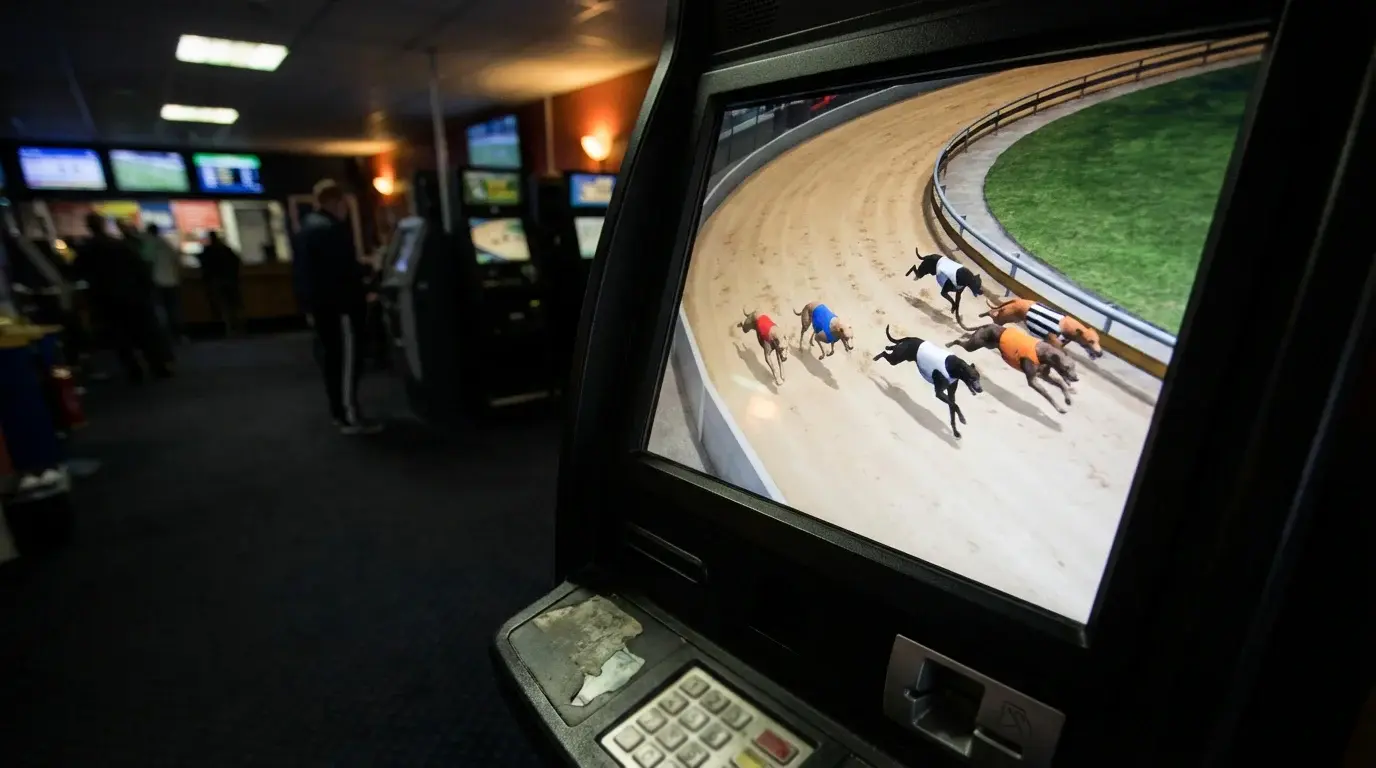
Virtual greyhound racing is a computer-generated simulation of a six-dog race, run at fixed intervals — typically every three to five minutes — around the clock. The races are available through online bookmakers and in betting shops, and they look, on the surface, much like a real race: animated greyhounds burst from traps, sprint around a track, and cross a finish line. Odds are offered. Bets are settled. Money changes hands. But the mechanics behind virtual racing are fundamentally different from the live sport, and understanding those differences is essential before placing a single bet.
Virtual greyhound racing exists because it fills a commercial gap. Live greyhound racing, even with BAGS providing fixtures from morning to night, has natural pauses between races and between meetings. Virtual races run continuously, offering a betting product every few minutes without any dependency on real dogs, real tracks, or real weather. For bookmakers, it’s a reliable revenue stream. For bettors, it’s a product that requires a completely different analytical framework from live racing — because there are no racecards, no form, and no dogs.
How Virtual Races Are Generated
A virtual greyhound race is produced by a random number generator (RNG) governed by certified software. The outcome of each race — the finishing order, the winning margins, the pace of the race — is determined by an algorithm before the visual animation even begins. The animation is a representation of a result that’s already been decided mathematically. You’re not watching dogs compete. You’re watching an illustration of a pre-calculated outcome.
The RNG is regulated and independently audited, just like the software behind online casino games. In the UK, virtual racing products are licensed by the Gambling Commission, and the software providers — companies like Inspired Entertainment and Kiron Interactive — must demonstrate that their RNG produces outcomes within certified probability parameters. The results are random within the framework of the odds offered, which means the favourite wins roughly as often as its price suggests, the outsider lands occasionally, and the overall return to bettors sits below 100%, reflecting the bookmaker’s built-in margin.
Each virtual race presents six runners with names, trap numbers, and odds. The names are fictional and rotate through a database. The odds are generated by the software to create a plausible market — a favourite at around 2/1 or 5/2, a couple of mid-range contenders, and a couple of outsiders. These odds reflect the probability weightings programmed into the RNG, not any assessment of real-world form. There is no form. Each race is an independent event with no connection to any previous race.
What Virtual Racecards Show — and What They Don’t
Virtual greyhound races display a card of sorts: six runners with trap numbers, names, and odds. Some virtual products add fictional form figures or ratings to create the appearance of a racecard. These figures are cosmetic. They’re generated to accompany the odds and give the product a racing feel, but they don’t represent any real past performance. Analysing virtual “form” is analysing a decoration — the numbers have no predictive value beyond what the odds already tell you.
This is the fundamental distinction between virtual and live racing. In live greyhound racing, the racecard is a data-rich document: CalcTm, sectional times, remarks, grade, weight, going, trap draw, trainer, and six runs of verifiable history. Every column provides information that can be combined into an informed assessment. In virtual racing, the only meaningful piece of information is the price, because the price is the probability. A virtual dog at 2/1 has approximately a 33% chance of winning — not because it’s faster or better drawn, but because the RNG is programmed to produce that outcome at roughly that frequency.
There is no going adjustment, because there’s no going. There’s no trap bias, because the track is an animation with no physical properties. There’s no trainer form, no kennel moves, no weight trends, no interference. Every element that makes live racecard analysis meaningful is absent. What remains is a betting market built on programmed probabilities — and the bettor’s role is reduced to selecting a runner at a price, with no analytical edge available.
Betting on Virtual Greyhounds: What’s Available
The bet types available on virtual greyhound racing mirror those offered on live races. Win, each-way, forecast, reverse forecast, tricast, and combination bets are all typically available. The mechanics are identical — a forecast still requires you to name first and second in order, a tricast still needs the first three — but the basis for making those selections is entirely different.
In live racing, you pick a forecast by identifying two dogs with the best form. In virtual racing, the forecast selection is either random or based on the odds structure. Some bettors use the virtual favourite and second favourite as a forecast pair, reasoning that the RNG will produce the two most probable winners more often than random alternatives. Mathematically, this approach aligns with the probabilities, but the margins are thin — virtual racing’s overround is typically higher than live racing’s, meaning the house edge on every bet is steeper.
Staking on virtual racing requires its own discipline. The rapid cycle of races — one every three to five minutes — creates a tempo that can accelerate betting volume far beyond what live racing allows. A bettor who places one bet per race across an hour of virtual racing has placed twelve to twenty bets. The same bettor following live BAGS meetings might place three or four bets in the same period. The speed of virtual racing compounds losses faster during a losing run and makes it harder to maintain the detached analysis that responsible betting requires.
The mathematical reality is blunt. Virtual greyhound racing typically carries a higher overround than live racing — often 20-30% across the six-dog market, compared to 15-20% in a live market. That means for every pound wagered across the full range of outcomes, the software retains 20-30p before any result is generated. Over hundreds of bets, that margin grinds down any bettor’s bankroll with mechanical certainty. No amount of selection skill can overcome it, because the selections are arbitrary. The overround is the product’s operating cost, and the bettor pays it on every race.
The Screen Isn’t a Track
Virtual greyhound racing is a betting product, not a sporting event. It provides continuous access to a wagering market, and the visual presentation mimics real racing closely enough to feel familiar. But the resemblance is surface-level. There are no dogs. There is no form. There is no card to read, no CalcTm to compare, no sectional time to analyse. The outcome is determined by software before the animated traps open, and the only information the product provides — the odds — is also the only information that matters.
If you bet on virtual greyhounds, do so with the understanding that it’s a probability game with a fixed house edge, not an analytical exercise. The skills you develop reading live racecards — assessing form, identifying trap bias, comparing CalcTms, reading remarks — have no application here. They belong to the live sport, where real dogs race on real sand and the racecard gives you a genuine toolkit for making informed decisions. The screen isn’t a track. The numbers aren’t form. And the dogs aren’t dogs.